

Table of Contents
- The Real Cost Comparison: Press-On Nails vs. Salon Manicures
- How Long Do Press-On Nails Last Compared to Gel or Acrylic?
- How to Apply Press-On Nails for Long Wear
- Reusable Press-On Nails Benefits: Why One Set Can Pay for Itself
- Nail Health and Safety: Press-Ons vs. Salon Services
- Time, Skill, and Maintenance: The Hidden Costs of Salon Appointments
- Which Option Fits Your Budget and Lifestyle?
- Frequently Asked Questions
Last Updated: September 16, 2026
The Real Cost Comparison: Press-On Nails vs. Salon Manicures
If you have ever walked out of a salon wondering whether the $70 you just spent was worth it, you are asking the right question about press on nails. The short answer: yes, press-on nails are almost always cheaper than salon manicures, and the gap widens dramatically over a year. At Liquid Glamour Nails, we hear this cost question constantly from busy professionals, parents, and teens who want a polished look without a recurring appointment on the calendar.
Below, we break down the real math, including the 12-month projection most price comparisons skip entirely.
Upfront Cost: What You Pay at Checkout
A single salon gel or acrylic manicure typically runs $40 to $80 depending on your city, the shape you choose, and whether removal is included. Add a soak-off appointment between sets and that number climbs further.
Press-on sets work differently. Liquid Glamour Nails offers reusable designs starting at $6.99, with the Essential Solid short square set at $23.99. Every set ships with adhesive tabs and nail glue included, so there is no separate supply run before your first application.

For a one-time event, the upfront difference is already significant.
The 12-Month Projection: Where the Math Gets Interesting
Salon clients who refresh every two to three weeks book roughly 18 to 24 appointments a year. Even at the low end of the price range, that adds up to a four-figure annual habit once tips and removal fees enter the picture.
| Cost Factor | Salon Manicures | Reusable Press-Ons |
|---|---|---|
| Upfront per look | $40-$80 | $6.99-$23.99 |
| Removal fee | Often extra | None |
| Annual appointments | 18-24 | 0 |
| Rewear potential | No | Yes, multiple times |
| Time per session | 60-90 minutes | Minutes at home |
How Long Do Press-On Nails Last Compared to Gel or Acrylic?
Press-on nails typically last 7 to 14 days with proper prep and glue application, while salon gel and acrylic sets last two to three weeks before a fill or removal. That durability gap is real, but it narrows considerably when you follow the application steps below.
How to Apply Press-On Nails for Long Wear
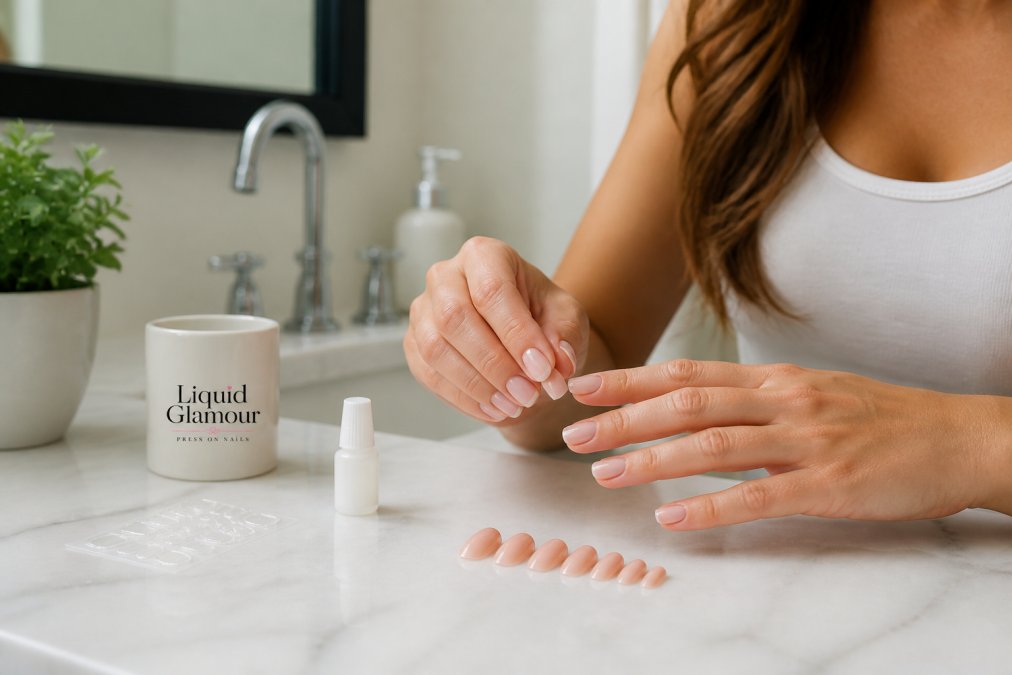
Long wear comes down to three things: clean nail prep, the right adhesive for your lifestyle, and correct sizing. Get those right and most people see a full week or more from a single application.
Nail Prep and Cuticle Care
Start by pushing back your cuticles gently with a wooden stick, then buff the surface of each nail to remove shine. This gives the adhesive something to grip.
Adhesive Tabs vs. Nail Glue
Each method suits a different wearer.
- Adhesive tabs: Best for beginners, teens, and anyone who wants to swap sets every few days. Tabs remove cleanly and make sets easy to reuse.
- Nail glue: Best for 7 to 14 day wear, gym sessions, and busy work weeks. Glue holds firmer but requires gentle removal with warm water and cuticle oil.
- Combination method: A glue dot under a tab gives extra hold for special occasions without a full glue commitment.
Reusable Press-On Nails Benefits: Why One Set Can Pay for Itself
Reusable press-on nails benefits extend well past the first wear. Because you remove them gently rather than soaking them off, the set survives for multiple applications, and that is where the cost advantage compounds.
Nail Health and Safety: Press-Ons vs. Salon Services
This is the section most cost comparisons skip entirely, and it is the one that matters most if you wear nails continuously. The health question is not 'which is safer' in the abstract, it is which specific mechanisms cause damage, and how each option lets you avoid them.
What Actually Damages the Natural Nail
Nail damage almost never comes from the polish or the product sitting on top of the nail. It comes from three mechanical and chemical events:
- Over-filing or e-filing the nail plate. Aggressive surface filing thins the nail and can leave it flexible, peeling, and sensitive.
- Improper removal. Prying, peeling, or over-soaking strips layers of the nail plate and dehydrates the nail bed.
- Repeated acetone exposure. Acetone is the standard soak-off solvent, and frequent, prolonged soaks pull moisture and oils out of the nail and surrounding skin.
The Chemistry on Each Side
On the salon side, the two product families behave differently:
-
Acrylics are built from a liquid monomer and a powder polymer that cure into a hard shell. The monomer chemistry is the subject of ongoing regulatory attention, and some states restrict certain formulations. If you have sensitivities, ask what system your salon uses.
-
Gel cures under UV or LED light and is generally considered lower-odor, but removal still requires acetone soaking or filing.
-
Nail glue is typically a cyanoacrylate adhesive. It bonds fast and strong, which is exactly why it can also bond skin, and why prying a glued nail off is the most common cause of press-on-related damage.
-
Adhesive tabs are pressure-sensitive and remove with far less force, making them the gentler option for anyone with thin or recovering nails.
-
Prep products like rubbing alcohol and buffers are low-risk when used as directed.
How to Protect Your Nails on Either Path
- Give nails breathing room. Whether you choose salon or press-on, schedule breaks so the nail plate can recover.
- Never peel or pry. For press-ons, soak in warm water with cuticle oil and let the adhesive release. For salon sets, insist on proper soak-off rather than dry prying.
- Keep nails short and dry. The American Academy of Dermatology's nail care guidance notes that keeping nails clean, dry, and trimmed helps prevent common nail problems, a routine that supports either option.
- Watch for warning signs. Persistent redness, swelling, pain, or changes in the nail itself are reasons to stop and see a clinician rather than push through.
- Ventilate. Salon workers handle strong chemicals daily, and the U.S. Occupational Safety and Health Administration's guidance on workplace chemical exposure exists precisely because prolonged exposure matters. Clients can limit their own exposure by spacing visits and choosing well-ventilated salons.
For anyone weighing cost against long-term nail condition, the honest framing is this: press-ons are generally gentler when applied and removed correctly, salons are not inherently harmful when done well, and the deciding factor in both cases is technique rather than the product itself.
Time, Skill, and Maintenance: The Hidden Costs of Salon Appointments
Time is the cost most price comparisons ignore. A salon appointment eats 60 to 90 minutes once you factor in travel, wait time, and the service itself. Multiply that by 18 to 24 visits a year and you are giving up dozens of hours.
Which Option Fits Your Budget and Lifestyle?
- Salon manicures: Best for special occasions, structured nail extensions, and anyone who wants a professional to handle intricate art.
- Reusable press-ons: Best for busy professionals, parents, teens, and value-conscious shoppers who want a salon-quality finish without the recurring cost or appointment.
- Hybrid approach: Use press-ons for everyday wear and reserve the salon for milestone events.
For a natural everyday look, the Natural Soft Pink Squoval Solid set delivers a "your nails but better" finish that suits professional settings. If you want something bolder for evenings out, the Black Solid Almond Glossy set is a timeless choice. Teens and anyone who prefers a short, practical shape will get the most repeat wear from the Essential Solid short square set, available in Milk Blue, Pippi Pink, and Black across Small, Medium, and Large.

Federal Trade Commission guidance on advertising claims
Frequently Asked Questions
How much should I pay for press-on nails?
Press-on nail prices range widely depending on the brand, design complexity, and whether the set is reusable. Budget-friendly solid-color sets can cost as little as $6.99, while larger or premium sets may run $20 or more. The key is cost per wear: a $6.99 set worn three times works out to about $2.33 per manicure, far below a typical salon visit. Focus on quality and reusability rather than the lowest sticker price.
Do press-on nails damage your natural nails?
Press-on nails cause far less damage than gel manicures, acrylics, or nail extensions when removed properly. The damage from salon services often comes from filing, soaking in acetone, and the removal process itself. With press-ons, you avoid harsh chemicals and drilling. Gently prying them off after soaking in warm soapy water, or using adhesive tabs instead of glue, keeps your nail bed health intact. Cuticle care and nail prep still matter for a clean result.
How long do high-quality press-on nails last?
With proper nail prep and nail glue, press-on nails typically last 7 to 14 days. Adhesive tabs tend to last 1 to 3 days, making them better for short events or when you want to swap styles often. Durability depends on your daily activities, how well you sized each nail, and whether you avoid using your nails as tools. Reusable sets that are removed gently can be worn multiple times, extending the value of each purchase.
What are the downsides of press-on nails?
The main downsides are shorter wear time compared to acrylics, the learning curve of at-home application, and the risk of popping off if nails are not properly prepped. Some users find that press-ons feel less secure during heavy tasks like typing or gym sessions. However, these issues are manageable with practice, correct sizing, and using nail glue for longer wear. The trade-off is worth it for anyone prioritizing budget-friendly, salon-quality looks without recurring salon appointments.