

Table of Contents
- Why Gel Manicures Damage Your Natural Nails
- What Makes a Non Damaging Manicure Alternative Work
- Are Press On Nails Cheaper Than Salon Gel Manicures?
- How Long Do Press On Nails Last Compared to Gel?
- How to Remove Press On Nails Without Damage
- Recovering Nail Health After Years of Gel Manicures
- Choosing the Right Press-On Set for Your Nails
- Frequently Asked Questions
Last Updated: September 23, 2026
Why Gel Manicures Damage Your Natural Nails
Gel manicures bond a hard, cured coating directly to the nail plate, and the removal process is what causes most of the damage. A non damaging alternative to gel manicures has to solve two problems at once: how the color attaches, and how it comes off.
The mechanism matters. Gel polish is a solvent-based formula that hardens under a curing lamp through polymerization, forming a rigid shell that adheres tightly to keratin. When that shell is filed or soaked off, it can strip layers of the nail plate with it.
The result is familiar to anyone who has worn gel for years:
- Nail thinning and a visibly thinner, more flexible nail plate
- Peeling and brittle nails that snag on fabric
- Nail dehydration from repeated acetone exposure
- Cuticle health damage from aggressive filing and pushing
A common mistake is blaming the polish itself.
What Makes a Non Damaging Manicure Alternative Work
A non damaging manicure alternative works by attaching color to the nail surface with temporary adhesive rather than a cured chemical bond. That single difference changes everything about removal.
- Nontoxic formula and no harsh solvents
- Breathable polish or adhesive that lets the nail plate stay dry
- Self-leveling finish so the surface looks smooth without filing
- A top coat-quality shine built in, so you skip extra layers
Are Press On Nails Cheaper Than Salon Gel Manicures?
Press on nails are almost always cheaper than salon gel manicures when you compare cost per wear rather than cost per set. The savings compound because press-ons are reusable, while gel is a recurring appointment with recurring fees.
The cost-per-wear model
Cost per wear is the only honest way to compare the two. It is simply total cost divided by the number of days the manicure is actually worn.
| Cost Factor | Salon Gel | Press-On Nails |
|---|---|---|
| Upfront cost per set | Higher per visit | $6.99 to $23.99 |
| Reuse | Single application | Multiple wears |
| Time per appointment | 45-90 minutes | Minutes at home |
| Removal cost | Included or extra | None |
| Replacement cycle | Every 2-3 weeks | As needed |
| Annual appointment count | ~17-26 visits | Zero required |
What the numbers look like in practice
Liquid Glamour Nails sets start at $6.99 for the Black Solid and White Solid Almond Glossy styles, and $12.99 for the full almond range, including Solid Cream, Solid Blush, and Solid Medium Beige. At $23.99, the Essential Solid Short Square set includes adhesive tabs and nail glue and comes in Small, Medium, and Large.

The hidden costs of gel that never show up on the menu
- Removal fees. Many salons charge separately to soak off gel, especially if you did not get the original set there.
- Repair visits. A lifted or chipped gel nail often means another appointment, not a touch-up at home.
- Time. Two to three hours a month in the chair is time you do not get back.
- Nail recovery. Thinned, damaged nails may push you toward strengtheners, oils, and a break from polish, costs that never appear on a salon receipt.
When press-ons are not the cheaper option
A common mistake is buying the cheapest set and replacing it weekly. Reusable press-ons only pay off if you remove them gently and store them.
How Long Do Press On Nails Last Compared to Gel?
Press on nails typically last one to two weeks with nail glue and a few days with adhesive tabs, while gel lasts two to three weeks before it grows out. The gap narrows fast when you factor in reusability.
Wear time depends on three things:
- Application technique: a clean, dry nail and even pressure make the biggest difference
- Adhesive choice: glue for longer wear, tabs for easy removal
- Daily activity: typing, dishwashing, and gym sessions shorten any manicure's life
How to Remove Press On Nails Without Damage
To remove press on nails without damage, soak the nails in warm soapy water and gently work the adhesive loose with a cuticle stick. Never pry them off dry.
Step by step:
- Fill a bowl with warm water and a drop of mild soap.
- Soak your fingertips for 5 to 10 minutes.
- Slide a cuticle stick under the edge and lift slowly.
- Wipe away residue and apply cuticle oil.
- Store the nails in their tray for reuse.
Recovering Nail Health After Years of Gel Manicures
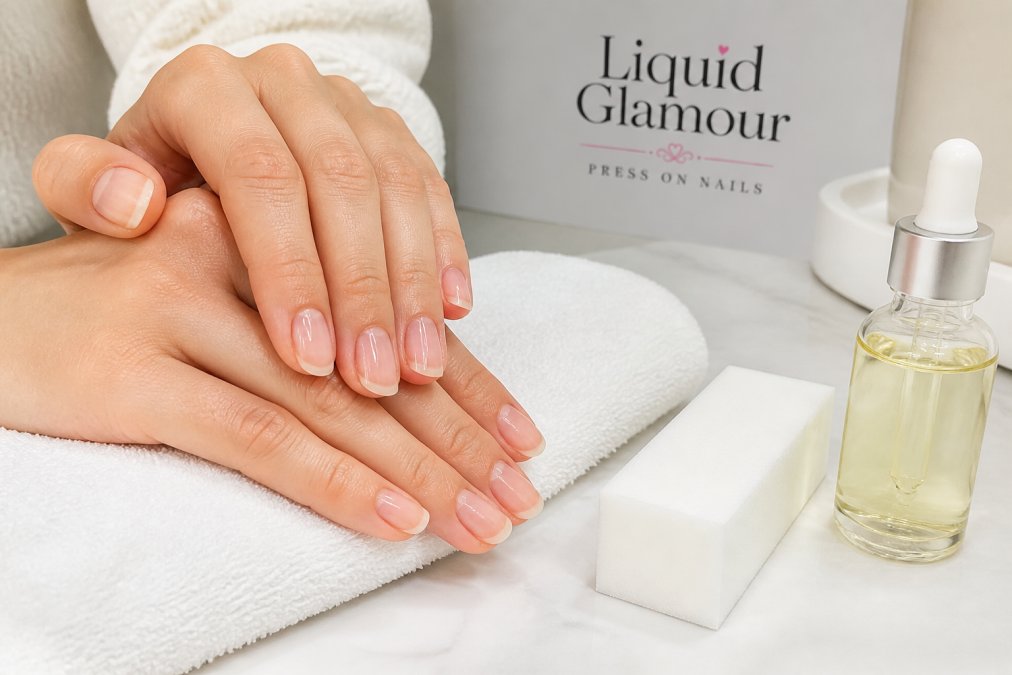
Recovering nail health after years of gel manicures is not about repairing the nail, it is about protecting the new nail while the damaged section grows out. That distinction is the one most guides skip, and it changes everything about how you should treat your hands for the next several months.
Why the nail plate can't be "repaired"
The visible nail is dead keratin. Once gel removal has thinned the plate or stripped surface layers, there is no topical product that rebuilds that keratin. Oils, balms, and strengtheners condition the nail plate and the surrounding skin, but the only thing that restores thickness is new growth pushing forward from the matrix at the base of the nail.
A phased post-gel recovery protocol
Weeks 1-2: Stop the damage cycle.
- Remove any remaining gel properly rather than peeling it.
- Avoid acetone entirely, including acetone-based polish remover and acetone-free formulas that still contain drying solvents.
- Keep nails filed short so the thin, flexible free edge does not snag and tear.
- Do not buff the nail surface. Buffing removes more of the plate you are trying to protect.
Weeks 3-6: Condition and protect.
- Apply a cuticle oil with jojoba or squalane daily, massaging it into the nail fold and the skin around the nail, not just the nail itself.
- Wear gloves for dishwashing, cleaning, and any prolonged water exposure. Waterlogged keratin is more prone to peeling.
- Use press-ons for events instead of returning to gel. They cover the damaged section without adding another removal cycle.
Months 2-4: Grow out and reassess.
- Watch for the "growth line", the boundary between the thin damaged section and the new, healthier nail. It moves roughly 3 millimeters a month.
- Continue daily oil and glove use even as nails start to feel normal.
- Resist the urge to file the surface smooth. Unevenness is a sign of past damage, not a defect to sand away.
Signs recovery is working
- New growth at the base looks thicker and less flexible than the older section.
- Peeling and snagging slow down or stop.
- The nail bed looks pinker and less ridged.
- White spots and horizontal ridges gradually move toward the tip as the nail grows out.
What to avoid during recovery
- Acetone, even in "gentle" removers, for at least the first month.
- Gel, dip powder, and acrylic, anything that cures or bonds onto the plate.
- Aggressive cuticle pushing or trimming that damages the seal around the nail.
- Biting or picking at peeling edges, which can lift layers of the plate.
What most guides miss is that the nail plate can't be "repaired" once it's thinned. The only fix is time and protection while new keratin grows. Press-ons help because they cover the damage without adding another removal cycle.
Choosing the Right Press-On Set for Your Nails
Choosing the right set comes down to fit, shape, and finish. A well-fitted press-on looks salon-quality; a badly fitted one pops off within a day.
Then match the shape to the occasion:
- Short square: neat, practical, and business-ready for work and school
- Almond: elongating and feminine for evenings, events, and photos
Frequently Asked Questions
Is there a healthier alternative to gel manicure?
Reusable press-on nails are the strongest non damaging manicure alternative. They attach with adhesive tabs or nail glue and lift off without acetone soaks or filing, so the nail plate and cuticle health stay intact. Sets like Liquid Glamour Nails' Essential Solid Short Square ($23.99) apply in minutes with no curing lamp, no UV exposure, and no dry time, and you can rewear them multiple times.
Are press on nails safer for your natural nails than gel?
Yes. Gel manicures require soaking in acetone and filing to remove, which strips keratin and causes nail thinning, peeling, and brittle nails over time. Press-ons skip both steps. Removing them with warm water and gentle lifting keeps the nail bed and cuticle intact, so your natural nails recover instead of being repeatedly dehydrated.
How much do press-on nails cost compared to salon visits?
Liquid Glamour Nails sets start at $6.99 for one-size styles like the Black Solid Almond, and $12.99 for multi-size sets such as Solid Blush Almond. Because they are reusable, one set can cover several wears, bringing the cost per manicure well below a single salon appointment.
How long do press-on nails actually last?
Wear time depends on application and adhesive. With nail glue, most press-on sets hold for 7 to 14 days; with adhesive tabs, expect 2 to 5 days. Prep matters most: buff lightly, wipe with alcohol, and press firmly for 30 seconds. Avoid soaking hands for the first few hours, and keep a spare tab or glue on hand for touch-ups.
The hardest part of leaving gel behind is trusting that something temporary can still look polished. It can. Liquid Glamour Nails makes reusable press-on sets with a salon-quality, chip-resistant finish, sized for adults, teens, and children, and priced from $6.99. You get the polished look without the curing lamp, the acetone, or the thinning. Browse the collection at Liquid Glamour Nails and find the set that fits your nails and your schedule.