

Table of Contents
- What Makes Press-On Nails Work for Everyday Wear
- Quick Comparison: Top Press-On Picks for Daily Wear
- 1. Natural Soft Pink Squoval Solid: Best Overall for Everyday Wear
- 2. Classic Soft Pink Square Nails: Best for Professional Settings
- 3. Solid Blush Almond Nails: Best for Versatile Daily Style
- 4. Essential Solid: Best for Beginners and Teens
- How to Make Press On Nails Last Longer
- How to Remove Press On Nails Without Damage
- Press On Nails vs Acrylics for Daily Wear
- Frequently Asked Questions
Last Updated: September 14, 2026
What Makes Press-On Nails Work for Everyday Wear
Press-on nails work for everyday wear when three things line up: proper adhesion, a shape that survives daily tasks, and a chip-resistant finish. At Liquid Glamour Nails, most "they popped off in a day" complaints trace back to skipped prep, not a bad product.
The best press on nails for everyday wear balance durability with a low profile: a short squoval or square tip catches less on keyboards, zippers, and car doors than a long stiletto. Longevity depends less on the glue than on the first five minutes of application.
Nail damage from years of gel or acrylics changes how a press-on sits: a curved nail bed needs a flexible tip that presses flat without lifting at the edges.
What matters most: prep the nail plate, size each tip to the individual nail, and choose a shape that matches your day. Below, we compare the picks that hold up, then cover application and removal.
Quick Comparison: Top Press-On Picks for Daily Wear
The best everyday press-on for most people is the Natural Soft Pink Squoval Solid, pairing a flattering neutral shade with a practical shape at $6.99. For professional settings, the Classic Soft Pink Square Nails ($9.99) read as polished without being loud. Beginners and teens do well with the Essential Solid ($23.99), in three colors and three sizes.

| Product | Shape | Price | Best For | Reusable |
|---|---|---|---|---|
| Natural Soft Pink Squoval Solid | Squoval | $6.99 | Best overall everyday | Yes |
| Classic Soft Pink Square Nails | Square | $9.99 | Professional settings | Yes |
| Solid Blush Almond Nails | Almond | $12.99 | Versatile daily style | Yes |
| Essential Solid | Round | $23.99 | Beginners and teens | Yes |
1. Natural Soft Pink Squoval Solid: Best Overall for Everyday Wear
The Natural Soft Pink Squoval Solid is the best press on nails for everyday wear: its squoval shape splits the difference between square and oval, staying neat without snagging, and the soft pink tone reads as "your nails but better" across skin tones and occasions.

Shape affects wear time more than most guides admit. A squoval tip has no sharp corners to catch on fabric, so fewer lift points over a long day. The salon-quality finish is smooth and chip-resistant, and the set is reusable.
The drawback: it comes in one size that fits most, so unusually narrow or wide nail beds may need adjusting. At $6.99, it's the lowest-risk way to test whether press-ons fit your routine.
2. Classic Soft Pink Square Nails: Best for Professional Settings
A square tip is the right call when your calendar is full of meetings. The Classic Soft Pink Square Nails deliver a clean, timeless silhouette that looks deliberate in a boardroom and on a video call.
The color is the selling point: soft pink is feminine without being loud and flatters every skin tone. The finish is glossy and chip-resistant through long days, and the set is reusable.
Where it falls short: square tips have defined corners, so if you type constantly or work with your hands, expect faster edge wear than a squoval. Size carefully to avoid lifting at the corners. At $9.99, it's a reasonable step up for client meetings.
3. Solid Blush Almond Nails: Best for Versatile Daily Style
Blush almond is the shape for one set that works from school pickup to dinner reservation. The Solid Blush Almond Nails pair a delicate blush pink with an almond tip that elongates the finger and reads elegant at any length.
This is the pick for people who don't want to think about their nails between applications. The tone is warm enough to feel romantic and neutral enough to pair with anything, and the salon-quality finish is smooth and chip-resistant. It's reusable across multiple wears.
The tradeoff is length: almond tips run longer than a short square, so if you're hard on your hands, be more careful. At $12.99, it's a small premium for a shape that flatters almost everyone.
4. Essential Solid: Best for Beginners and Teens
First-timers should start with the Essential Solid: a short square set in three versatile colors, Milk Blue, Pippi Pink, and Black, available in Small, Medium, and Large, which solves the fit problem that trips up most beginners.

Short square nails are the most forgiving shape for daily wear: less length to catch on things, and a neat silhouette that looks put-together without effort. The finish is glossy and chip-resistant, and the set is reusable, so beginners can practice, remove, and retry without wasting a set.
The honest limitation is price: at $23.99, it costs more than the other picks, but the three-size range and three colors make it the most flexible set for a household with different nail sizes. For teens and first-timers, that flexibility is worth it.
How to Make Press On Nails Last Longer
The biggest factor in how long press-ons last is cuticle prep. Skip it and even the best adhesive lifts within a day; do it properly and a set can hold a week or more.
Here's the routine that works:
- Push back cuticles and remove any oil or lotion from the nail plate.
- Buff the surface lightly to give the adhesive something to grip.
- Wipe each nail with an alcohol pad to dehydrate the nail plate.
- Size every tip to its specific nail, not to the largest one in the set.
- Apply a thin, even layer of liquid adhesive or a glue tab, then press firmly for 15 seconds.
- Hold off on water for the first hour so the bond can cure.
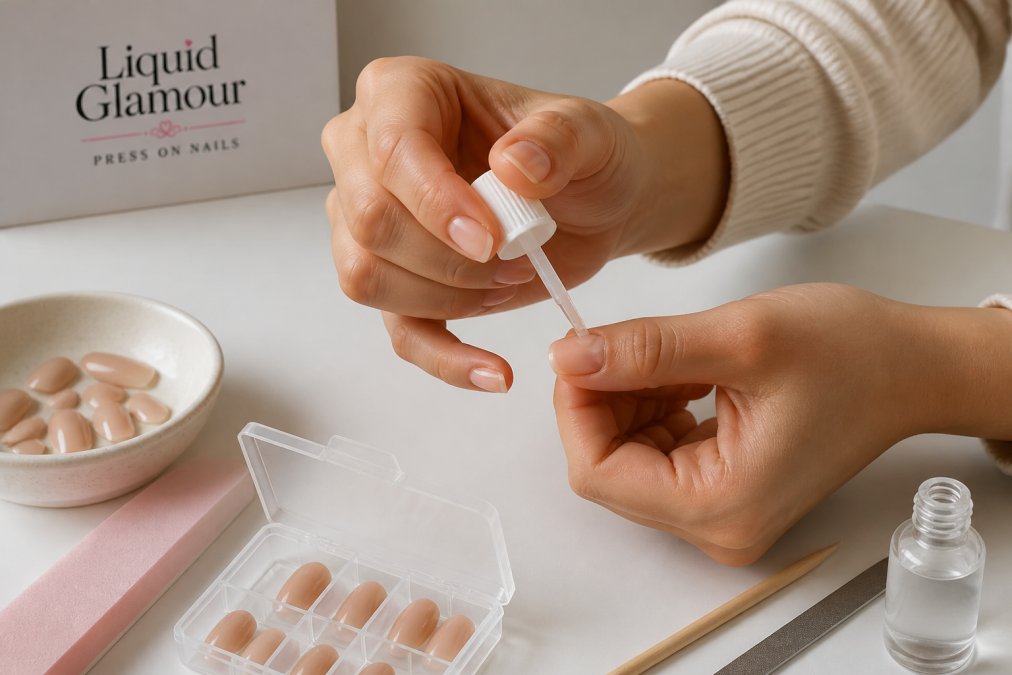
Why Press-Ons Pop Off: A Troubleshooting Guide
Most guides stop at the application steps. The more useful skill is diagnosing a failure after it happens, because the fix depends on the cause. Match your symptom to the culprit below.
They fall off within a few hours. The nail plate wasn't dehydrated. Natural oils, hand lotion, and cuticle cream residue form a film adhesive can't bond through; the tip feels secure, then releases when you wash your hands. Fix: wipe every nail with an alcohol pad immediately before applying, and don't touch the nail plate afterward.
They lift at the edges but stay put in the center. This is sizing, not adhesion. A too-wide tip bridges the sidewalls and rocks; a too-narrow tip leaves edges unsupported. Fix: match each tip to its own nail, and if a tip sits between sizes, file the larger one's sidewalls rather than forcing the smaller one on.
They feel loose or spongy after a day. Too much glue. A thick layer cures unevenly, firm at the center, tacky at the edges, and never fully sets. Fix: use a thin, even coat, enough to wet the surface, not a visible bead.
They hold for days, then release all at once. Usually moisture creep: repeated hand washing, dish duty, or a long shower works water under the bond until it gives way. Fix: wear gloves for wet tasks and re-press edges after any long soak.
They pop off a nail that's curved or has ridges. A rigid tip can't sit flush on a curved nail bed, so only the center contacts. Fix: choose a flexible tip, and for pronounced ridges, apply a thin layer of ridge-filling base coat so the adhesive has a flatter surface to grip.
Think of adhesion as a chain that fails at its weakest link: prep, sizing, glue volume, and moisture control are four separate links. A set that fails early usually has one weak link, not four, fix the cause your symptom points to instead of redoing the whole routine.
For a deeper look at how adhesive chemistry affects wear time, the American Chemical Society overview of cyanoacrylate adhesives explains why surface prep matters more than glue volume. The U.S. Food and Drug Administration guidance on cosmetic nail products also covers what to look for in nail product labeling.
How to Remove Press On Nails Without Damage
The right way to remove press-ons is slow and acetone-free where possible. Ripping a tip off takes a layer of the nail plate with it, how years of gel manicures turn into thin, damaged nails.
Soak your fingertips in warm soapy water for 10 to 15 minutes. For glue tabs, this alone often loosens the bond enough to work the tip free from the side. For liquid adhesive, an acetone-free remover formulated for press-ons works without stripping the nail.
- Never pry a tip off from the cuticle edge. Work from the side and let the adhesive release.
- Keep a small cuticle stick handy to ease the tip up as it loosens.
- After removal, buff away any residual glue and apply cuticle oil to rehydrate the nail plate.
- Store the set in its original tray so the tips keep their shape for the next wear.
If your nails are already thin or damaged, give them a recovery period between wears. A flexible tip that presses flat against a curved nail bed sits better on a recovering nail than a rigid one.
Press On Nails vs Acrylics for Daily Wear
Press-ons win for daily wear on time, cost, and nail health. Acrylics require a salon visit, a drill, and a fill every few weeks; press-ons apply in minutes at home and remove without drilling.
Cost-per-wear is where the gap widens. A reusable press-on set can be worn several times, spreading the purchase price across each wear. Acrylics are a recurring salon expense with no reuse: you pay for the initial set, then again for every fill. Exact totals depend on your salon, but the structure matters, one is a one-time purchase you amortize, the other a subscription.
There's a second cost that doesn't show up on a receipt: nail health. Acrylic removal involves soaking or filing, and repeated cycles thin the nail plate (pubmed.ncbi.nlm.nih.gov). Press-ons removed correctly, soaked and eased off rather than pried, don't take a layer of keratin with them. If your nails are already thin from years of gel or acrylics, that difference compounds.
The honest caveat: acrylics hold up longer under heavy wear, and if you need a set that survives weeks of manual work without a second thought, they remain stronger. For everyday wear, though, press-ons' flexibility, easy look changes, and lack of nail damage make them the more practical choice for most people.
Getting the Fit Right: A Sizing Guide for Different Nail Beds
A press-on only looks natural, and stays put, when it matches the width of the nail it sits on. This is the step most people rush, and why a set that looked perfect in the box can look bulky or fall off in a day.
How to measure your nail beds. Lay a soft measuring tape or paper strip across the widest part of your bare nail, sidewall to sidewall, and note the width in millimeters. Do all ten nails, thumbs and pinkies are proportionally different from middle fingers for most people. Write the numbers down; you'll use them every time you buy a set.
Match by width, not by length. The tip should cover the nail bed sidewall to sidewall without overlapping the skin. If it overlaps, it will lift as the skin moves. If it leaves a gap, the edges have nothing to grip.
When you're between sizes. Size down and file, rather than sizing up. A slightly narrow tip can be widened at the sidewalls with a file to sit flush; an oversized tip can't be shrunk and will always rock.
Wide or narrow nail beds. If your nails are wider than the largest tip in a set, look for brands selling individual sizes or a wide-fit option. If your nails are narrow, a small size range may leave you filing every tip, workable but tedious. This is where a multi-size set earns its price.
Curved nail beds. A flat tip on a curved nail only contacts at the center. Choose a flexible tip that can bend to follow the curve, and press from the center outward to work out any trapped air.
Ridged or uneven nails. A thin layer of ridge-filling base coat before application gives the adhesive a flatter surface, which improves both the look and the hold.
A quick test before you commit: press the tip onto the dry nail without adhesive. It should sit flat, cover the bed, and not extend past the sidewalls. If it doesn't pass that test, no amount of glue will save it.
That's the case for a small rotation of sets rather than one long-term manicure: a neutral squoval for work, a blush almond for weekends, and a short square for busy weeks covers almost every situation without a salon visit.
Frequently Asked Questions
What is the most highly rated press-on nails for everyday wear?
The Natural Soft Pink Squoval Solid set from Liquid Glamour Nails is a top pick for daily wear. Its squoval shape blends square and oval for a practical, polished look, and the soft pink tone works with any outfit. At $6.99, it offers salon-quality shine without the salon price. The set includes adhesive tabs and nail glue, and it's reusable, so you can rewear it multiple times.
How do you make press on nails stay on for two weeks?
Start with clean, dry nails. Push back cuticles and buff the nail plate lightly to remove oils. Wipe each nail with rubbing alcohol to dehydrate the surface. Apply a thin layer of liquid adhesive to both your natural nail and the press-on, then press firmly for 15 seconds. Avoid water for the first hour. With proper prep and glue, press-ons can last up to two weeks. Adhesive tabs work for 1-3 days; liquid adhesive gives the longest wear.
Is it safe to wear press-on nails every day?
Yes, when applied and removed correctly. Press-ons sit on top of your natural nail and don't require drilling or filing like acrylics. To protect nail health, use an acetone-free removal method when possible, never peel or pry them off, and give your nails a day of rest between sets. If you notice thinning or damage, take a break. Following a gentle removal process keeps your natural nails healthy for daily wear.
What is the difference between glue-on and adhesive tab press-ons?
Glue-on press-ons use liquid adhesive for a strong bond that can last up to two weeks, ideal for everyday wear and long events. Adhesive tabs are pre-cut sticky strips that press between your natural nail and the press-on. They're faster to apply and easier to remove, but typically last only 1-3 days. Tabs are great for short-term wear or for kids and teens. Many sets, including those from Liquid Glamour Nails, include both options.
How do I remove press on nails without damage?
Soak your nails in warm soapy water or acetone-free remover for 10-15 minutes. Gently slide a cuticle stick under the edge of each press-on to lift it. Never pull or bite them off. If using glue, a small amount of cuticle oil around the edges can help loosen the bond. After removal, buff away any leftover adhesive and moisturize with cuticle oil. This soak-off method protects your nail plate and keeps press-ons reusable.